
A useful book for authors and other creatives
4 stars
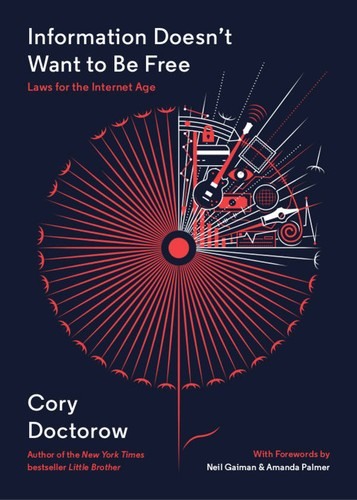
Cory Doctorow, with impressive credentials in tech and copyright law, explains why copyright laws are ill-suited to the information age, do a lot of damage, and serve the interests of few. Published in 2014, the book is still relevant more than a decade on, although some things have moved on. He expounds three 'laws' in this book. His first law is 'any time someone puts a lock on something you own and won't give you the key, that lock isn't there for your benefit'. This is a reference to digital rights management (DRM) which is used by big bookshops (like Amazon) to lock readers into using their site and e-readers. For many this is now old news, but it is still a widespread practice and many authors still buy the idea that they need DRM to protect their works. Doctorow gives a lucid and useful explanation of what DRM is …
Cory Doctorow, with impressive credentials in tech and copyright law, explains why copyright laws are ill-suited to the information age, do a lot of damage, and serve the interests of few. Published in 2014, the book is still relevant more than a decade on, although some things have moved on. He expounds three 'laws' in this book. His first law is 'any time someone puts a lock on something you own and won't give you the key, that lock isn't there for your benefit'. This is a reference to digital rights management (DRM) which is used by big bookshops (like Amazon) to lock readers into using their site and e-readers. For many this is now old news, but it is still a widespread practice and many authors still buy the idea that they need DRM to protect their works. Doctorow gives a lucid and useful explanation of what DRM is and why it's problematic. A quick browser search shows as many posts explaining 'why DRM matters' as there are 'how to remove DRM' posts, so the battle still rages. How you feel about the issue will of course depend on where you sit in the publishing ecosystem. The second law is 'Fame won't make you rich, but you can't get paid without it'. In this chapter Doctorow discusses intermediaries and their role in getting books noticed. He argues that conversation is key to this and discusses the business models available to authors who want to 'get paid'. Personally I think this law is not true and is rather lazy since there is a lot of ground between being unknown and being famous and plenty of authors manage to get paid (more or less well) in that space. Still, it contains some useful ideas for how to get paid, not all requiring fame. His third law is that 'Information doesn't want to be free, people do.' This one I agree with. In this chapter he discusses copyright, explaining that it was developed to protect the interests of publishers and continues to do so, at the expense of authors. He proposes developing a new copyright system which would better support creativity, including shorter terms and giving the author the right to renegotiate terms on expiry. This chapter also explains how copyright leads inevitably to widespread surveillance, because of the need to police it. This results in broad powers being assigned to booksellers. Given the number of distraught authors out there who have been randomly targetted by Amazon of late, this is a very real problem and worth understanding. Doctorow concludes with a call for authors and other creatives to champion freedom of expression and personal privacy. I think we each need to investigate and decide what we are comfortable with. Authors who think that DRM protects their work should read chapter 1. Authors figuring out how to make a living from writing might benefit from chapter 2. And authors ready to boldly go into the territory of alternatives to copyright, chapter 3 is for you. For all creatives, this book is a useful read, although I'd like to see a follow-on with more information about the alternatives to copyright for those of us who want to push for a better publishing ecosystem.